Documentaries Featuring Me
|
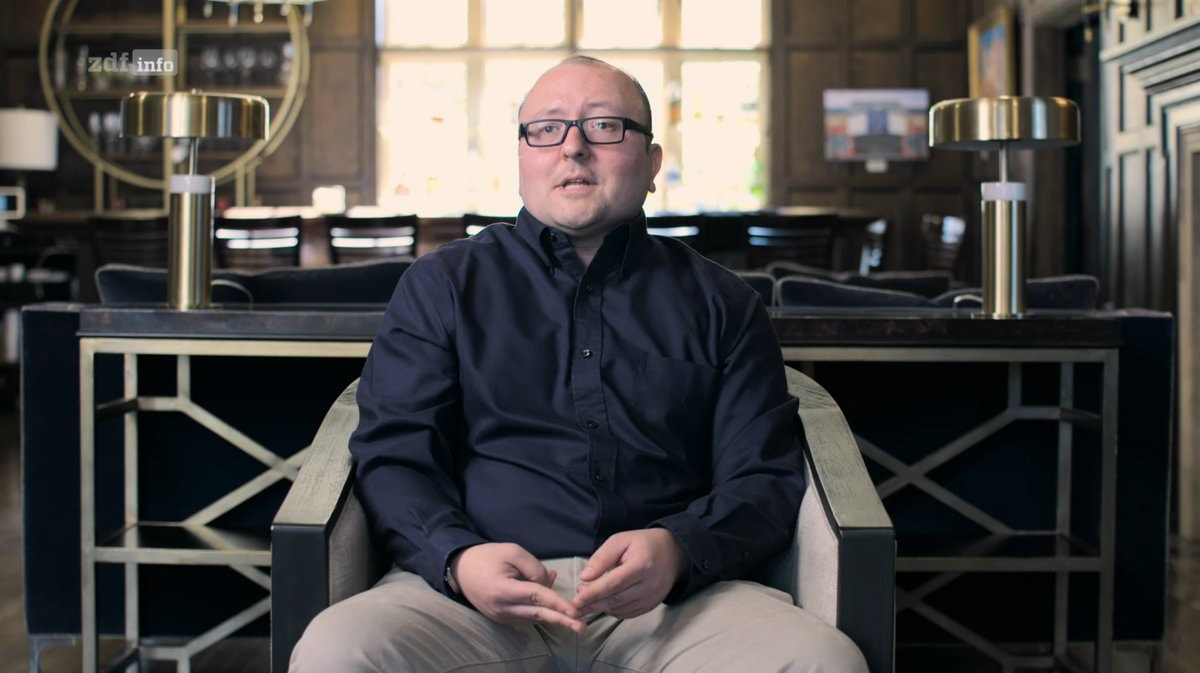
America's Book of Secrets (S02E01, 2013)
The second season premiere of America's Book of Secrets reused footage from the 2009 Ancient Aliens pilot and featured my article "Charioteer of the Gods" as an example of "skeptics" who challenged ancient astronaut claims and suffered mental anguish at the thought that the ancient alien idea could be true. |
|
Ancient Aliens Debunked (2012)
Chris White's three-hour exploration of the ancient astronaut theory includes thorough discussions of my work covering Arthur Posnansky, ancient atom bombs, and vimana aircraft. Watch it here. |
Books Featuring Me
|
Fear and Learning: Essays on the Pedagogy of Horror edited by Aalya Ahmad and Sean Moreland (McFarland, 2013).
In an essay entitled "Beyond the Lure: Teaching Horror, Teaching Theory," Carleston University professor Brian Johnson uses my Knowing Fear in discussing the horror genre and its relationship to science fiction and claims for a philosophical and theoretical foundation. |
|
Rabid: A Cultural History of the World's Most Diabolical Virus by Bill Wasik and Monica Murphy (Viking, 2012).
The authors discuss my Knowing Fear and use its definition of monsters and discussion of nineteenth century biological horror as part of their exploration of the reflection of rabies in Victorian horror literature. |
|
Monsters in America: Our Historical Obsession with the Hideous and Haunting by W. Scott Poole (Baylor University Press, 2011).
I am discussed in conjunction with the rise of the ancient astronaut theory and the development of extraterrestrials as monsters in the middle twentieth century. Poole discusses my Cult of Alien Gods and says that it makes a "convincing" argument for the connection between H. P. Lovecraft's fiction and the later ancient astronaut theory. |
|
Civilizations Beyond Earth: Extraterrestrial Life and Society edited by Douglas A. Vakoch and Albert A. Harrison (Bergahn Books, 2011).
I am referenced in two articles in this edited anthology of pieces on the search for extraterrestrial and its consequences: the editors' introduction and Harrison's chapter on "make-believe history and pseudoscience." In both cases, my work on the origins of the ancient astronaut theory in early science fiction is referenced. |
|
Horror After 9/11 by Aviva Briefel and Sam J. Miller (U of Texas, 2011).
In this book about the horror genre after 9/11, the authors quote my Knowing Fear several times in relation to the torture porn genre. The authors examine my view that the popularity of horror cannot be conclusively tied to states of war, and they critique my opinion that the Saw movies' villain, Jigsaw, exists primarily as a justification for depicting torture on screen, preferring to read him instead as a complex psychological figure. |
|
Supernatural America: A Cultural History by Lawrence R. Samuel (Praeger, 2011).
In his new book on the history of the supernatural in the United States, cultural historian, frequent author, and marketing consultant Lawrence R. Samuel discusses my Cult of Alien Gods in the context of the ancient astronaut theory, saying that my thesis about the influence of H. P. Lovecraft on the ancient astronaut theory was an "interesting argument" and using my book to support the notion that 1970s pseudoscience had serious and negative consequences for the public (mis)understanding of science. |
|
Genes, Giants, Monsters, and Men: The Surviving Elites of the Cosmic War and Their Hidden Agenda by Joseph P. Farrell (Feral House, 2011).
Alternative historian and theologian Joseph P. Farrell believes that the Giza pyramids were ancient weapons, and in his new book he collects a hodgepodge of well-worn and frequently debunked alternative theories on everything from paleontology to Sumeria. In a section on "archaeological coverups," Farrell discusses my article "Archaeological Coverup" in order to dismiss my conclusions and support David Hatcher Childress's contention that the Smithsonian is a nexus of conspiracies aimed at suppressing the truth about ancient aliens and a prehistoric effort to genetically engineer human beings. |
|
The Rescue by George Romero (Lotus / CreateSpace, 2010).
Self-published, grammatically-challenged independent researcher George Romero sought the truth about UFOs, and in so doing decided to misrepresent the Wikipedia entry for "ancient astronauts" by badly paraphrasing its references to my 2004 Skeptic magazine article "Charioteer of the Gods." Without further comment, he repeats Wikipedia's (false) claim that I said von Daniken "plagiarized" from Morning of the Magicians, and (correctly) that the book (which refers to in the plural) was influenced by Lovecraft. |
|
The Encyclopedia of Dubious Archaeology: From Atlantis to the Walum Olum, by Kenneth L. Feder (Greenwood, 2010).
Feder recommends my article on the alleged 1909 "Archaeological Coverup" of supposed Grand Canyon lost civilization, claimed to be a vast complex of underground caverns populated by people who wrote in Mayan hieroglyphs and worshiped the Buddha. As I showed, no evidence for the civilization or its supposed discoverer exists. Feder calls my article "a thorough debunking of the hoax." In Feder's opinion, "Belief in the lost Grand Canyon civilization by writers like David Hatcher Childress, who wrote Lost Cities in (sic) North and Central America, is in fact far more like a religion then (sic) a science-based hypothesis" (p. 123). |
|
The Man Who Collected Psychos: Critical Essays on Robert Bloch, ed. by Benjamin Szumskyj (McFarland, 2009).
In an essay on the uses of the Gothic in Robert Bloch's Psycho Rebecca Janicker relates Bloch's work to my theories about the development of the horror genre, noting Bloch's transition from supernatural to psychological horror during the period I identify as a genre-wide transitioning between those two modes of horror. |
|
Invented Knowledge: False History, Fake Science and Pseudo-Religions, by Ronald Fritze (Reaktion Books, 2009).
Ronald Fritze discusses alternative history movements and the reasons many have accepted false claims about history. He says that in The Cult of Alien Gods I "plausibly credited some of H. P. Lovecraft's horror tales from the 1920s and '30s about primeval aliens visiting earth and creating life with inspiring the theories of Erich von Daniken and others that space-travellers visited earth in prehistoric and historic times and were viewed as gods" (p. 14). |
|
Starstruck: Cosmic Visions in Science, Religion and Folklore, by Albert A. Harrison (Berghahn Books, 2007).
Albert A. Harrison, an emeritus professor of psychology, writes about the intersection of myth, religion, and science in the search for meaning in the cosmos. In so doing, he draws frequently on my Cult of Alien Gods to describe the history of the ancient astronaut movement and its frequent intersection with science fiction and fantasy fiction. |
|
Icons of Horror and the Supernatural: An Encyclopedia of Our Worst Nightmares, ed. S. T. Joshi (Greenwood Press, 2006).

S. T. Joshi, the best-known Lovecraft scholar, writes that I present "convincing evidence that such proponents of the theory of extraterrestrial visitation as Erich von Daniken and Graham Hancock were directly or indirectly inspired by Lovecraft's tales..." (p. 126). |
Academic Papers featuring Me
Jenseits des Sachbuchs: Erich von Dänikens Astronautengötter in Romanen, Kurzgeschichten und Multimedia [Beyond the non-fiction book: Erich von Däniken’s astronaut gods in novels, short stories and multimedia] by Jonas Richter, in Religiöse Gegenwartskultur: Zwischen Integration und Abgrenzung, 2012.
Richter cites my Cult of Alien Gods in support of his discussion of how von Däniken's ancient astronauts permeated popular culture following the film and TV-movie adaptation of von Däniken's Chariots of the Gods.
Sign of the Librarian in the Cinema of Horror: An Exploration of Filmic Function, a doctoral dissertation by Antoinette G. Graham (Florida State University, 2010).
Graham frequently cites Knowing Fear as a source for understanding the origin and function of horror films and their application to depictions of knowledge, librarians, and library. Read her dissertation here.
Confronting the "Boundless and Hideous Unknown": Science, Categorization, and Naming in H. P. Lovecraft's Fiction, a doctoral dissertation by Matolcsy Kalman (University of Debrecen, Hungary, 2010).
Kalman cites Knowing Fear as a major source for understanding the role of science and knowledge in horror fiction in general, and Lovecraft's relationship to both in particular. My book is used as a framework and major source for Kalman's dissertation. Read it here.
The Nature of Horror and Modern Theorists, paper presented to the 2009 conference of the Classical Association of the Midwest and South, by Edmund P. Cueva (Xavier University).
Cueva cites Knowing Fear as a major work of horror theory that he used to help drive debate at a panel discussion on horror literature in classical antiquity. "Interestingly for this panel, [Colavito] notes that the ancient world did not develop the horror tale in the modern sense," Cueva wrote. "He is careful to point out that the fear felt in the horror genre is not the fear one has in a real-life fright, rather it is an 'artistic emotion.'" The abstract can be read here.
The Attraction of Sloppy Nonsense: Resolving Cognitive Estrangement in Stargate through the Technologizing of Mythology, a master's thesis by Sandra (Sonny) Whitelaw (University of Queensland, 2007).
The thesis is an exegesis of Whitelaw's own Stargate tie-in novel, explaining its background in terms of the ancient astronaut movement and the blurring of boundaries between science fiction and fantasy, supported by my Cult of Alien Gods. Read it here.
Richter cites my Cult of Alien Gods in support of his discussion of how von Däniken's ancient astronauts permeated popular culture following the film and TV-movie adaptation of von Däniken's Chariots of the Gods.
Sign of the Librarian in the Cinema of Horror: An Exploration of Filmic Function, a doctoral dissertation by Antoinette G. Graham (Florida State University, 2010).
Graham frequently cites Knowing Fear as a source for understanding the origin and function of horror films and their application to depictions of knowledge, librarians, and library. Read her dissertation here.
Confronting the "Boundless and Hideous Unknown": Science, Categorization, and Naming in H. P. Lovecraft's Fiction, a doctoral dissertation by Matolcsy Kalman (University of Debrecen, Hungary, 2010).
Kalman cites Knowing Fear as a major source for understanding the role of science and knowledge in horror fiction in general, and Lovecraft's relationship to both in particular. My book is used as a framework and major source for Kalman's dissertation. Read it here.
The Nature of Horror and Modern Theorists, paper presented to the 2009 conference of the Classical Association of the Midwest and South, by Edmund P. Cueva (Xavier University).
Cueva cites Knowing Fear as a major work of horror theory that he used to help drive debate at a panel discussion on horror literature in classical antiquity. "Interestingly for this panel, [Colavito] notes that the ancient world did not develop the horror tale in the modern sense," Cueva wrote. "He is careful to point out that the fear felt in the horror genre is not the fear one has in a real-life fright, rather it is an 'artistic emotion.'" The abstract can be read here.
The Attraction of Sloppy Nonsense: Resolving Cognitive Estrangement in Stargate through the Technologizing of Mythology, a master's thesis by Sandra (Sonny) Whitelaw (University of Queensland, 2007).
The thesis is an exegesis of Whitelaw's own Stargate tie-in novel, explaining its background in terms of the ancient astronaut movement and the blurring of boundaries between science fiction and fantasy, supported by my Cult of Alien Gods. Read it here.
Stories about Me
Review in Science Fiction Studies vol. 37 (2010).
In a three-page review, Amy J. Ransom of Central Michigan University praises my Hideous Bit of Morbidity: "Jason Colavito has contributed a delightful reference work (is that an oxymoron?) to the field of horror studies..."
Praise in The Journal of the Fantastic in the Arts vol. 20 (2009).
In "The Science of Horror, the Horror of Science" D. Harlan Wilson takes an extended and excellent critical look at my Knowing Fear. Wilson praises my book: "This is among the finest introductions to the horror genre I have read."
Review in Science Fiction Studies vol. 36 (2009).
Rebecca Janicker of the University of Nottingham praises my Knowing Fear: "[T]his is an accessible and thought-provoking book [that] usefully sets an agenda for debate in charting the changing societal and fictional emphases in horror fiction through time and cultural change."
Praise in H. P. Lovecraft's Magazine of Horror (Spring/Summer 2007)
In "Kudos for Cthulhu," a summary of recent books about H. P. Lovecraft, Peter Cannon devotes the first half of his essay to me and says that "Jason Colavito makes a convincing case in his highly readable study from Prometheus Books, The Cult of Alien Gods."
Review in Science Fiction Studies vol. 33 (2006)
Rebecca Janicker of the University of Portsmouth praises my Cult of Alien Gods in Science Fiction Studies: "The observations about the place for a pseudo-scientific belief in extraterrestrials in an increasingly-decadent Western world sit nicely with existing Lovecraft scholarship." Read it here.
Skeptical Inquirer Reviews Me
The September-October 2006 Skeptical Inquirer features a review of The Cult of Alien Gods.
Skeptic's Dictionary Takes Me On
Robert Todd Carroll's Skeptic's Dictionary newsletter discusses my take on supernatural television. (Be sure to note the correction at the end of the article.) Read it here.
Praise from Archaeology Magazine
Archaeology Magazine praised Lost Civilizations Uncovered in its March/April 2006 issue, singling out my "smartly written" articles: "The next time you hear someone favorably cite Hancock or von Däniken, send them to Colavito." You can read the full review here.
Jason Colavito on Los Angeles' Air Talk
Listen to a radio interview award-winning host Larry Mantle did with me on Air Talk, a public affairs radio program airing on Los Angeles' KPCC 89.3 FM in January 2006. I discussed The Cult of Alien Gods, the influence of H. P. Lovecraft, and more. Listen here.
Sending the Saucers Spinning
Read a November 2005 interview with me in the Syracuse, NY Post-Standard here.
In a three-page review, Amy J. Ransom of Central Michigan University praises my Hideous Bit of Morbidity: "Jason Colavito has contributed a delightful reference work (is that an oxymoron?) to the field of horror studies..."
Praise in The Journal of the Fantastic in the Arts vol. 20 (2009).
In "The Science of Horror, the Horror of Science" D. Harlan Wilson takes an extended and excellent critical look at my Knowing Fear. Wilson praises my book: "This is among the finest introductions to the horror genre I have read."
Review in Science Fiction Studies vol. 36 (2009).
Rebecca Janicker of the University of Nottingham praises my Knowing Fear: "[T]his is an accessible and thought-provoking book [that] usefully sets an agenda for debate in charting the changing societal and fictional emphases in horror fiction through time and cultural change."
Praise in H. P. Lovecraft's Magazine of Horror (Spring/Summer 2007)
In "Kudos for Cthulhu," a summary of recent books about H. P. Lovecraft, Peter Cannon devotes the first half of his essay to me and says that "Jason Colavito makes a convincing case in his highly readable study from Prometheus Books, The Cult of Alien Gods."
Review in Science Fiction Studies vol. 33 (2006)
Rebecca Janicker of the University of Portsmouth praises my Cult of Alien Gods in Science Fiction Studies: "The observations about the place for a pseudo-scientific belief in extraterrestrials in an increasingly-decadent Western world sit nicely with existing Lovecraft scholarship." Read it here.
Skeptical Inquirer Reviews Me
The September-October 2006 Skeptical Inquirer features a review of The Cult of Alien Gods.
Skeptic's Dictionary Takes Me On
Robert Todd Carroll's Skeptic's Dictionary newsletter discusses my take on supernatural television. (Be sure to note the correction at the end of the article.) Read it here.
Praise from Archaeology Magazine
Archaeology Magazine praised Lost Civilizations Uncovered in its March/April 2006 issue, singling out my "smartly written" articles: "The next time you hear someone favorably cite Hancock or von Däniken, send them to Colavito." You can read the full review here.
Jason Colavito on Los Angeles' Air Talk
Listen to a radio interview award-winning host Larry Mantle did with me on Air Talk, a public affairs radio program airing on Los Angeles' KPCC 89.3 FM in January 2006. I discussed The Cult of Alien Gods, the influence of H. P. Lovecraft, and more. Listen here.
Sending the Saucers Spinning
Read a November 2005 interview with me in the Syracuse, NY Post-Standard here.
Stories Featuring Me
Let's Not Omit History Because It Is Inconvenient by Firas Al-Atraqchi / The Huffington Post
In this December 2012 article, journalism professor Firas Al-Atraqchi uses an extensive quotation from my review of Andrew Marr's History of the World TV series to support his critique that the program unfairly left out the Middle East and its contribution to the development of civilization. Read the article here.
Horror's Muse by Alice Gregory / n+1
In this July 2012 article reviewing a new book about rabies in popular culture, the author discusses my definition of monsters and suggests that animal monsters are no longer relevant in a technology-centric modern culture. Read the article here.
Decoding the Cultural Influences in 'Prometheus,' from Lovecraft to 'Halo.' by Giovindini Murty / The Atlantic
In this June 2012 article about the many influences on the 2012 ancient astronaut movie Prometheus, my article "Charioteer of the Gods" is used to support the influence of H. P. Lovecraft on the ancient theory in discussing Ridley Scott's use of the theory as background for his movie Prometheus. Read the article here.
Far Out: Where Went the Ancient Astronauts? by Nathan Schneider / The Smart Set
Read about the history of the ancient astronaut movement and its decline from its 1970s heights in this insightful October 2008 article that draws on my Cult of Alien Gods and quotes me about the ancient astronaut craze. Read the article here.
Atlantis Ho! by Mike Sula / Chicago Reader
Read about controversial author David Hatcher Childress's unique views. The article features a quote from me about Childress's use of the conditional tense to hedge his claims, as well as Childress's claim that I don't know anything about him because I relate his work to the ancient astronaut/alternative archaeology movement. Read the article here.
The New Shoggoth Chic by Amy H. Sturgis / Apex Science Fiction and Horror Digest 1, no. 4 (December 2005).
Sturgis explores the convergence of Lovecraft-themed literature, cinema, and other products in 2005 with mention of my Cult of Alien Gods among many others. Read it here.
In this December 2012 article, journalism professor Firas Al-Atraqchi uses an extensive quotation from my review of Andrew Marr's History of the World TV series to support his critique that the program unfairly left out the Middle East and its contribution to the development of civilization. Read the article here.
Horror's Muse by Alice Gregory / n+1
In this July 2012 article reviewing a new book about rabies in popular culture, the author discusses my definition of monsters and suggests that animal monsters are no longer relevant in a technology-centric modern culture. Read the article here.
Decoding the Cultural Influences in 'Prometheus,' from Lovecraft to 'Halo.' by Giovindini Murty / The Atlantic
In this June 2012 article about the many influences on the 2012 ancient astronaut movie Prometheus, my article "Charioteer of the Gods" is used to support the influence of H. P. Lovecraft on the ancient theory in discussing Ridley Scott's use of the theory as background for his movie Prometheus. Read the article here.
Far Out: Where Went the Ancient Astronauts? by Nathan Schneider / The Smart Set
Read about the history of the ancient astronaut movement and its decline from its 1970s heights in this insightful October 2008 article that draws on my Cult of Alien Gods and quotes me about the ancient astronaut craze. Read the article here.
Atlantis Ho! by Mike Sula / Chicago Reader
Read about controversial author David Hatcher Childress's unique views. The article features a quote from me about Childress's use of the conditional tense to hedge his claims, as well as Childress's claim that I don't know anything about him because I relate his work to the ancient astronaut/alternative archaeology movement. Read the article here.
The New Shoggoth Chic by Amy H. Sturgis / Apex Science Fiction and Horror Digest 1, no. 4 (December 2005).
Sturgis explores the convergence of Lovecraft-themed literature, cinema, and other products in 2005 with mention of my Cult of Alien Gods among many others. Read it here.