
Classic books and articles about ghosts, monsters,
aliens, and things that go bump in the night.
aliens, and things that go bump in the night.
|

|
THE DEVILS OF LOUDUN
Des Niau (1634) "Such is the true story of the possession of the nuns of Loudun and of the condemnation of Urbain Grandier, so different from the false accounts hitherto published..." |

|
ON THE SUBLIME AND BEAUTIFUL
Edmund Burke (1756/1757) "No passion so effectually robs the mind of all its powers of acting and reasoning as fear. For fear being an apprehension of pain or death, it operates in a manner that resembles actual pain. Whatever therefore is terrible, with regard to sight, is sublime too..." |
|
VAMPIRES
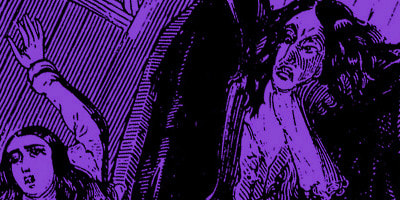
Voltaire (1764) These vampires were corpses, who went out of their graves at night to suck the blood of the living, either at their throats or stomachs, after which they returned to their cemeteries. The persons so sucked waned, grew pale, and fell into consumption; while the sucking corpses grew fat [...] and enjoyed an excellent appetite. |

|
LETTERS ON DEMONOLOGY AND WITCHCRAFT
Sir Walter Scott (1830) "These attributes, it may be cursorily noticed, themselves intimate the connexion of modern demonology with the mythology of the ancients. The cloven foot is the attribute of Pan—to whose talents for inspiring terror we owe the word panic—the snaky tresses are borrowed from the shield of Minerva..." |
|
|
THAUMATURGIA
An Oxonian (1835) "The Greeks, and after them the Romans, conferred the appellation of Demon upon certain genii, or spirits, who made themselves visible to men with the intention of either serving them as friends, or doing them an injury as enemies. " |
|
|
BULGARIAN VAMPIRES
S. G. B. St. Clair and Charles A. Brophy (1877) "By far the most curious superstition in Bulgaria is that of the Vampire, a tradition which is common to all countries of Slavonic origin, but is now to be found in its original loathsomeness only in these provinces." |
|
|
APPARENT CONFLICT BETWEEN RELIGION AND EVOLUTION
Frederick, Lord Bishop of Exeter (1884) "...the doctrine of Evolution leaves the argument for an intelligent Creator and Governor of the world stronger than it was before. [...] But whatever may be the relation of the doctrine of Evolution to Revelation, it cannot be said that this doctrine is antagonistic to Religion in its essence." |

|
TRANSYLVANIAN SUPERSTITIONS
Emily Gerard (1885) "As I am on the subject of thunderstorms, I may as well here mention the Scholomance, or school supposed to exist somewhere in the heart of the mountains, and where all the secrets of nature, the language of animals, and all imaginable magic spells and charms are taught by the devil in person." |
|
DEFINING A ZOMBIE
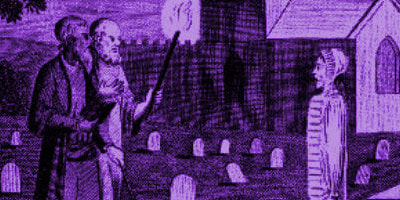
Lafcaido Hearn (1890) "But the word “Zombi” also has special strange meanings. . . . You pass along the high-road at night, and you see a great fire, and the more you walk to get to it the more it moves away: it is the zombi makes that. ... Or a horse with only three legs passes you: that is a zombi." |
|
|
THE DREAD OF THE SUPERNATURAL
The Spectator (1897) "The fear caused by what is supposed to be a supernatural agency seems, then, to have in it some element not found in ordinary fear. If and when the haunting phenomena cause fear they seem to give a shock of quite special keenness." |
|
|
VAMPIRES
J. R. S. Sterrett (1899) "The best evidence that death has been caused by a vampire is the mark of a bite on the nape of the neck, though sudden death of any kind is regarded as its work. The fear of sudden death is said to be very great among the peoples with whom the vampire loves to dwell..." |
|
|
WEREWOLVES AND VAMPIRES AND GHOULS
Elliott O'Donnell (1912) "The lid of the coffin was off, the corpse was lying huddled up on the floor, and crouching over it was Constance. For God's sake don't ask me to describe more—the sounds we heard explained everything. When she saw us she emitted a series of savage snarls, sprang at one of the maids, scratched her in the face, and before we could stop her, flew downstairs and out into the street." |
|
|
SCIENTIFIC TRUTHS CONTAINED IN FAIRY STORIES
Hereward Carrington (1921) "...most of these stories have no basis of fact behind them, but [...] are merely the product of the story-teller's imagination—just as similar stories today are produced in this manner. But, on the other hand, it is quite conceivable that many of the seemingly fabulous accounts are in truth based upon realities..." |
|
THE CURSED CAR
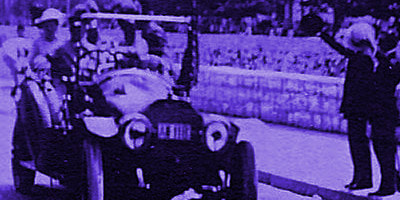
Emery Deri (1926 or 1927) "The car swerved, crashed into another automobile, and the next minute both machines crumbled up—completely wrecked. The “devil-car” had carried down to its final destruction five of the six passengers." |