
A SKEPTIC'S DEFENSE OF
SUPERNATURAL TELEVISION
Jason Colavito
2006
Jason Colavito comes to the rescue of fiction with a skeptical
defense of television shows that incorporate the supernatural.
defense of television shows that incorporate the supernatural.
The supernatural took over U.S. television this past year [2005-2006] in the wake of the success of ABC's Lost. Programs about psychic detectives, alien invaders, monster hunters, and mysterious creatures proliferated on American airwaves, and a wary public braced for a science fiction renaissance rivaling only crime-based television in the number of prime time hours devoted to it.
This invasion of paranormal programming prompted immediate cries from television critics that the shows' monsters were television’s way to explore the aftermath of the War on Terror. Skeptics countered that the success of otherworldly shows indicated that broadcasting had slipped back into a quagmire of irrationalism, posing a danger to America and civilization as we know it.
Purdue University communications professor Glenn Sparks sent out a press release warning that last fall’s television shows "could encourage people who can least afford it to start spending money on psychics." Sparks also warned that teenagers were susceptible to the shows’ pernicious influence, and he said "networks should consider posting disclaimers about the reality of the shows."[1]
Many skeptics who issue such dire warnings and oppose televised supernatural fiction often engage in uncritical and fallacious thinking that undercuts their rationalist message. Attacking these television shows, or even the idea of supernatural fiction in general, risks insulting the audience skeptics wish to reach, and it suggests an elitist, condescending attitude that continues to give skeptics a bad name.
British television critic Ian Bell was particularly scathing in his review of NBC's Medium, a drama about a psychic consultant, based in part on alleged real-life psychic Allison DuBois, calling the show "hogwash": "In my world," Bell wrote, "there is a real and growing problem caused by the bizarre things ordinary Americans are, apparently, prepared to believe." He did, concede, though, that "it's only TV."[2] Skeptical Inquirer's Joe Nickell also blasted the show because it "shamelessly touted" DuBois as though she were actually able to psychically solve crimes.[3]
This invasion of paranormal programming prompted immediate cries from television critics that the shows' monsters were television’s way to explore the aftermath of the War on Terror. Skeptics countered that the success of otherworldly shows indicated that broadcasting had slipped back into a quagmire of irrationalism, posing a danger to America and civilization as we know it.
Purdue University communications professor Glenn Sparks sent out a press release warning that last fall’s television shows "could encourage people who can least afford it to start spending money on psychics." Sparks also warned that teenagers were susceptible to the shows’ pernicious influence, and he said "networks should consider posting disclaimers about the reality of the shows."[1]
Many skeptics who issue such dire warnings and oppose televised supernatural fiction often engage in uncritical and fallacious thinking that undercuts their rationalist message. Attacking these television shows, or even the idea of supernatural fiction in general, risks insulting the audience skeptics wish to reach, and it suggests an elitist, condescending attitude that continues to give skeptics a bad name.
British television critic Ian Bell was particularly scathing in his review of NBC's Medium, a drama about a psychic consultant, based in part on alleged real-life psychic Allison DuBois, calling the show "hogwash": "In my world," Bell wrote, "there is a real and growing problem caused by the bizarre things ordinary Americans are, apparently, prepared to believe." He did, concede, though, that "it's only TV."[2] Skeptical Inquirer's Joe Nickell also blasted the show because it "shamelessly touted" DuBois as though she were actually able to psychically solve crimes.[3]
|
Let us begin by dispensing with the caveats. First, Medium, along with Ghost Whisperer on CBS, are both based on supposedly true stories. Skeptics are right to attack these programs for falsely claiming some kind of truth. Second, many of these shows are not very good — based on their merits as drama, not as science. Others are excellent, like Lost and the WB's Supernatural — probably the purest and best-made horror series on network television. But too many skeptical critics question the very right of fictional programs to include supernatural elements, as though their existence were an affront to science and reason.
Here's the problem: |
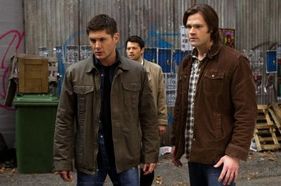 Supernatural promotional still. © 2011 CW-TV / Warner Bros. |
First, such complaints fuel the image that skeptics are priests in the temple of reason condescending to average Americans (and to fellow skeptics who enjoy supernatural fiction). It gives the appearance that skeptics believe viewers of these programs are ignorant, stupid, or too enthralled by the flashing pictures on the idiot box to differentiate between news and drama. It is one thing to point out that such things are not "real;" another to appear to tell viewers they are less worthy than the austere rationalists who would never indulge in irrational entertainment.
Second, the reasoning behind these criticisms is flawed. Supernatural dramas, the argument goes, shouldn't exist because the supernatural is unreal. But, then, what is the purpose of fiction? All fiction is inherently unreal, as it is stories of things that did not happen. If the only appropriate topics for fiction are things that are possible, then why does fiction exist at all? If we condemn storytelling to the realm of the real, then storytelling is robbed of the very elements that make it more than simply history — the ability to manipulate time and space and the possible and impossible to create compelling stories that reach toward higher truth. If Lost does this and Medium does not, this is where critical discernment--not scientific condemnation--come into play.
Lastly--and my personal pet peeve--is that the skeptical criticism only extends to shows that trend toward horror and not pure science fiction. Obviously this is because many skeptics are scientists and have an affinity for sci-fi, but in the realm of what is real and what is science fact, extraterrestrials, warp drives, and galaxies far far away are every bit as unproven as Gothic horrors. ET may be slightly more scientifically probable than ghosts, but neither is currently known to exist. And before critics complain that Star Trek never led anyone down the garden path, let's not forget the Heaven's Gate cult watched Star Trek religiously and hoped to beam up to the waiting aliens after their 1997 mass suicide. This proves only that disturbed people will fixate on whatever pop culture throws at them, supernatural or not.
It is possible for skeptics to watch and enjoy supernatural horror because since the dawn of time stories have always been about more than just the plausibility of their plots. The great horror author H.P. Lovecraft, himself an ardent materialist, atheist, and skeptic, loved supernatural horror and wrote the book on it--Supernatural Horror in Literature. He recognized the "genuineness and dignity of the weirdly horrible tale" against those who call for a "didactic literature to uplift the reader toward a suitable degree of smirking optimism."[4]
If a materialist like him could love a good ghost story, why can't we love Supernatural? After all, there is nothing inherently "better" about non-supernatural stories. Who among us can say that as preposterous as ghost whisperers are that they are any more preposterous than the plot of The OC? That's why they call it "fiction."
Second, the reasoning behind these criticisms is flawed. Supernatural dramas, the argument goes, shouldn't exist because the supernatural is unreal. But, then, what is the purpose of fiction? All fiction is inherently unreal, as it is stories of things that did not happen. If the only appropriate topics for fiction are things that are possible, then why does fiction exist at all? If we condemn storytelling to the realm of the real, then storytelling is robbed of the very elements that make it more than simply history — the ability to manipulate time and space and the possible and impossible to create compelling stories that reach toward higher truth. If Lost does this and Medium does not, this is where critical discernment--not scientific condemnation--come into play.
Lastly--and my personal pet peeve--is that the skeptical criticism only extends to shows that trend toward horror and not pure science fiction. Obviously this is because many skeptics are scientists and have an affinity for sci-fi, but in the realm of what is real and what is science fact, extraterrestrials, warp drives, and galaxies far far away are every bit as unproven as Gothic horrors. ET may be slightly more scientifically probable than ghosts, but neither is currently known to exist. And before critics complain that Star Trek never led anyone down the garden path, let's not forget the Heaven's Gate cult watched Star Trek religiously and hoped to beam up to the waiting aliens after their 1997 mass suicide. This proves only that disturbed people will fixate on whatever pop culture throws at them, supernatural or not.
It is possible for skeptics to watch and enjoy supernatural horror because since the dawn of time stories have always been about more than just the plausibility of their plots. The great horror author H.P. Lovecraft, himself an ardent materialist, atheist, and skeptic, loved supernatural horror and wrote the book on it--Supernatural Horror in Literature. He recognized the "genuineness and dignity of the weirdly horrible tale" against those who call for a "didactic literature to uplift the reader toward a suitable degree of smirking optimism."[4]
If a materialist like him could love a good ghost story, why can't we love Supernatural? After all, there is nothing inherently "better" about non-supernatural stories. Who among us can say that as preposterous as ghost whisperers are that they are any more preposterous than the plot of The OC? That's why they call it "fiction."
References
- "Professor: TV Shows May Tune Our Belief in the Supernatural." 2005. AScribe Newswire, September 6.
- Bell, I. 2005. "The Psychic Who Prompted a Mass Superstition." The Herald, September 14.
- Nickell, J. 2005. "The Case of the 'Psychic Detectives.'" Skeptical Inquirer, July–August, 16–19.
- Lovecraft, H.P. 2000. The Annotated Supernatural Horror in Literature. Ed. S.T. Joshi. New York: Hippocampus Press, 21.
Follow-Up
In an April 27, 2006 letter to the editor of eSkeptic, Glenn Sparks responded to my article:
I read with some interest Jason Colavito's editorial in eSkeptic that defended supernatural television [see eSkeptic for April 20th, 2006]. In order to set up his whole defense, he used some quotations from me that were contained in a press release that warned about the impact of paranormal programming. I am glad that he provided a link to the original press release so that readers could see for themselves what I actually said.
The intent of my release was not to make the sorts of general criticisms against the genre or its viewers that he rails against. He failed to mention that I noted in the release that these shows can make for great entertainment. The point of the release was to simply point out that for some viewers--and especially for younger viewers, these shows can have some effects on beliefs. That, in the end, is simply a research-based fact. Like it or not. --Glenn Sparks
I responsed to Prof. Sparks:
While I appreciate Prof. Sparks's letter to the editor regarding my piece defending supernatural television, I must disagree with his assessment of both my piece and his press release. A careful reading will show that I used his statements as examples of the warnings skeptics raised about supernatural television fostering irrationalism and posing a threat to the public. The more general criticisms of supernatural television were not attributed to Prof. Sparks but instead to "skeptics" and specifically the criticisms leveled by Ian Bell and Joe Nickell.
Prof. Sparks is quite correct that he calls supernatural television "a great form of entertainment," but he also says it "may be harmful," "could encourage people [note: not just younger viewers, as Prof. Sparks says in his letter] who can least afford it to start spending money on psychics," and "networks should consider posting disclaimers about the reality of the shows." While it is true that nowhere does he say that he opposes such shows, calling for warning labels is pretty close!
Prof. Sparks's interesting research can tell us much about the subject of television and the role it plays in shaping beliefs, but it did not differentiate between paranormal beliefs presented as fact in nonfiction or news programming and paranormal phenomena presented as dramatic fiction [1]. While I do not doubt that truth claims by news shows can affect belief, I remain unconvinced that TV viewers fail to distinguish the CBS Evening News or Dateline from Ghost Whisperer or Supernatural.
Sincerely,
Jason Colavito
I read with some interest Jason Colavito's editorial in eSkeptic that defended supernatural television [see eSkeptic for April 20th, 2006]. In order to set up his whole defense, he used some quotations from me that were contained in a press release that warned about the impact of paranormal programming. I am glad that he provided a link to the original press release so that readers could see for themselves what I actually said.
The intent of my release was not to make the sorts of general criticisms against the genre or its viewers that he rails against. He failed to mention that I noted in the release that these shows can make for great entertainment. The point of the release was to simply point out that for some viewers--and especially for younger viewers, these shows can have some effects on beliefs. That, in the end, is simply a research-based fact. Like it or not. --Glenn Sparks
I responsed to Prof. Sparks:
While I appreciate Prof. Sparks's letter to the editor regarding my piece defending supernatural television, I must disagree with his assessment of both my piece and his press release. A careful reading will show that I used his statements as examples of the warnings skeptics raised about supernatural television fostering irrationalism and posing a threat to the public. The more general criticisms of supernatural television were not attributed to Prof. Sparks but instead to "skeptics" and specifically the criticisms leveled by Ian Bell and Joe Nickell.
Prof. Sparks is quite correct that he calls supernatural television "a great form of entertainment," but he also says it "may be harmful," "could encourage people [note: not just younger viewers, as Prof. Sparks says in his letter] who can least afford it to start spending money on psychics," and "networks should consider posting disclaimers about the reality of the shows." While it is true that nowhere does he say that he opposes such shows, calling for warning labels is pretty close!
Prof. Sparks's interesting research can tell us much about the subject of television and the role it plays in shaping beliefs, but it did not differentiate between paranormal beliefs presented as fact in nonfiction or news programming and paranormal phenomena presented as dramatic fiction [1]. While I do not doubt that truth claims by news shows can affect belief, I remain unconvinced that TV viewers fail to distinguish the CBS Evening News or Dateline from Ghost Whisperer or Supernatural.
Sincerely,
Jason Colavito
- Sparks, G. G. and Miller, W. 2000. Investigating the Relationship between Exposure to Television Programs that Depict Paranormal Phenomena and Beliefs in the Paranormal, p. 12. http://www.beaweb.org/bea2000/papers/spa&mil.pdf
"A Skeptic's Defense of the Supernatural" first appeared in Skeptic 12.3 (Summer 2006) and eSkeptic (April 20, 2006). © 2006 Jason Colavito. All rights reserved. Reproduction of this article is strictly forbidden without the express written permission of the author and Skeptic.
